Descrption:
Old fortifications always have a special charm. These places cherish historical stories and form basis for organizing various kinds of events. Stone walls and high towers bring exotic feel to the town landscape.
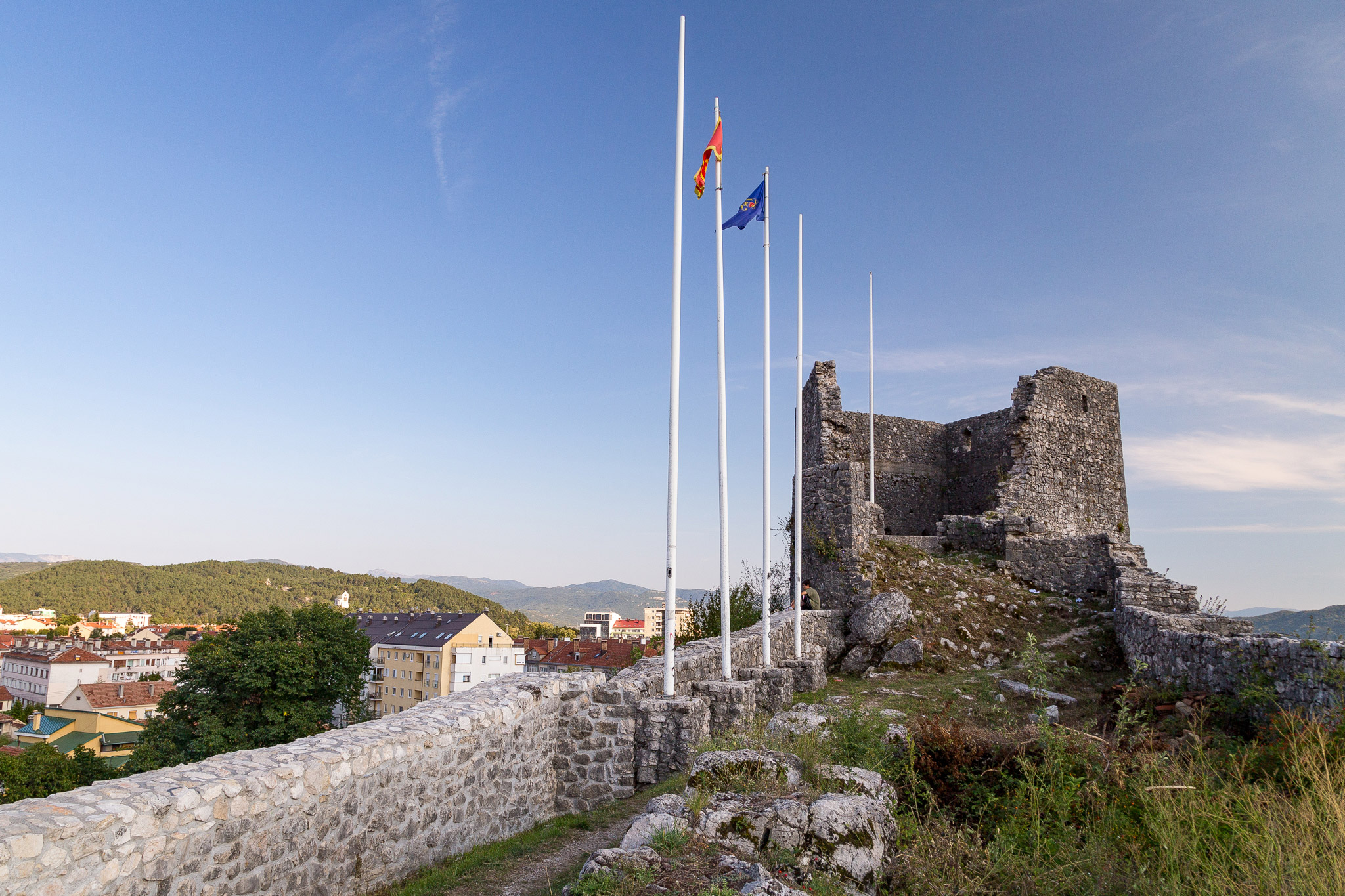
According to their construction style, a citadel was always protected by a rock or a wall. This is the case with the fortification in Nikšić as well. It is located on stone grounds, above the field and it is surrounded by thick stone walls.
It was a center of both political and religious power. The fortress represented a symbol of strength and durability. It had withstood hardships for a long period of time until the historical liberation act took place. Today, it represents an emblem of both past and battle.
The town fortress in Nikšić was damaged in battles for freedom but it has not been completely destroyed and ruined while winding streets underneath the rampart now represent a part of Stara varoš. The new plan did not ignore the stone fortification and its surroundings. On the contrary, it was formed in relation to this spatial segment.
Towers had their poetic moments through history. They had various purposes during different epochs and in different spaces. They were subjects of legends and traditional stories. If a tower is not well known, then the people would come up with a story that begins to describe them. Towers became the space between the facts and poetry. Their aura was gradually earning new dimensions and they were established as poetic architectural spaces. These stone fortifications, over time, convey a meaning through symbolical moments and their interpretations.
Towers in Nikšić fortress bear many interesting stories. Some of these towers are preserved today while partial walls that withstood the time suggest the existence of other towers. Many verses were written about the building of the fortress. Many researchers were interested in its architecture.
Some popular names of towers stuck because of certain happenings which were linked to them. Thus, for example, Petkovača tower earned its name for hajduk Petko Kovačević who had once been incarcerated there.
Thanks to conclusions by archaeologists Evans, Praschniker and Schober as well as historians Jiracek and Šuflaj, Petar Šobajić determines that the this military fortification was established in 3rd or 4th century AD. Roman castrum had been destroyed by barbarians and rebuilt by Goths. Arthur Evans concludes that the old town consisted of a citadel and the lower part of the town surrounded by the rampart. After persecution of Goths, Anagastum belonged to Byzantines (6th and 7th century). Slovenians then inherited the town and changed its name to Onogošt. Although the name Nikšić appeared at the end of 14th century, the name Onogošt stuck for five more centuries. Turkish conquest in 1465 completely changed its course of development. The town was ruined and deserted. The idea of its renewal emerges after the Morean war and Treaty of Karlowitz. At the request of the Porte, it was suggested that the new fortification should be built in Rastoci or the former one should be renewed. The second option was chosen which resulted in works which were done between 1701 and 1703. Data from archives in Dubrovnik and Kotor, discovered by Jovan Ivović, show that the town was finally fortified in 1713.
Jovan Ivović discovered that king Alfonso of Naples and tsar Fridrich’s charters from 1444, 1448 and 1454, which were given to Herceg Strjepan, bear no data of this fortification. The same documents include fortifications of Budoš, Ostrog and Susjed – Jerin’s town in Župa. The rampart, supposedly, had then been destroyed.
Defining and alteration of borders between Republic of Venice and Turkish Empire took place in 1701 when Grahovo, Klobuk, Trebinje and Nikšić remained under Turkish patronage. At the end of that year or at the beginning of the following one, the renewal of the rampart began. The walls had been destroyed while the firm fortification was formed in 1713.
A century and a half has passed since the liberation of the fortification. The rampart, which is generally accepted as the name of Nikšić stone fortification, was being attacked for a long period of time. Thanks to its position on the hill and bearing in mind that it was a symbol of strength and power, it has not been easily conquered.
It withstood the rebellions for multiple decades until August 27th/September 8th 1877. After 47 days under siege during which it was surrounded by Montenegrin and Herzegovinian rebels, the fortification fell and its military commander Miralaj Skenderbeg gave the town keys to prince Nikola I Petrović.
Ludvik Kuba records in his travelogues from the beginning of 1890s that the old Turkish Nikšić was located on the long rock. In Avelo and Nezjer’s travelogue which was published in Paris in 1895 it was recorded that the old Turkish palace casts a shadow over the town. A spring where Muslim women washed their clothes and out of which Montenegrin women took water was also described.
The rampart cannons roared on special occasions such as birthday of the heir to the throne. A liturgy was held in St. Peter’s church after which the cannon fired and made the celebration bigger. People gathered in Makrida café where local captain Obren Niković made a toast. The celebration continued with music, gun fires and shouts.
“Nevesinje” magazine reminded everyone at the beginning of September in 1898 that the Montenegrin flag had been fluttering on the Onogošt ramparts for 21 years. The town was decorated and the liturgy was held in the St. Peter’s church. The king and significant individuals were also present.
In august, “Onogošt” newspapers published a text on liberation in 1899 with a vivid description of Onogošt with a flag. They also emphasized battles and wars which it endured and its grandiosity furnished with the new flag.
Pieces of history had some negative consequences as well. Thus, an edition of this newspaper wrote that an accident occurred when a boy had been hurt when playing with a cannon ball that he had found in the rampart.
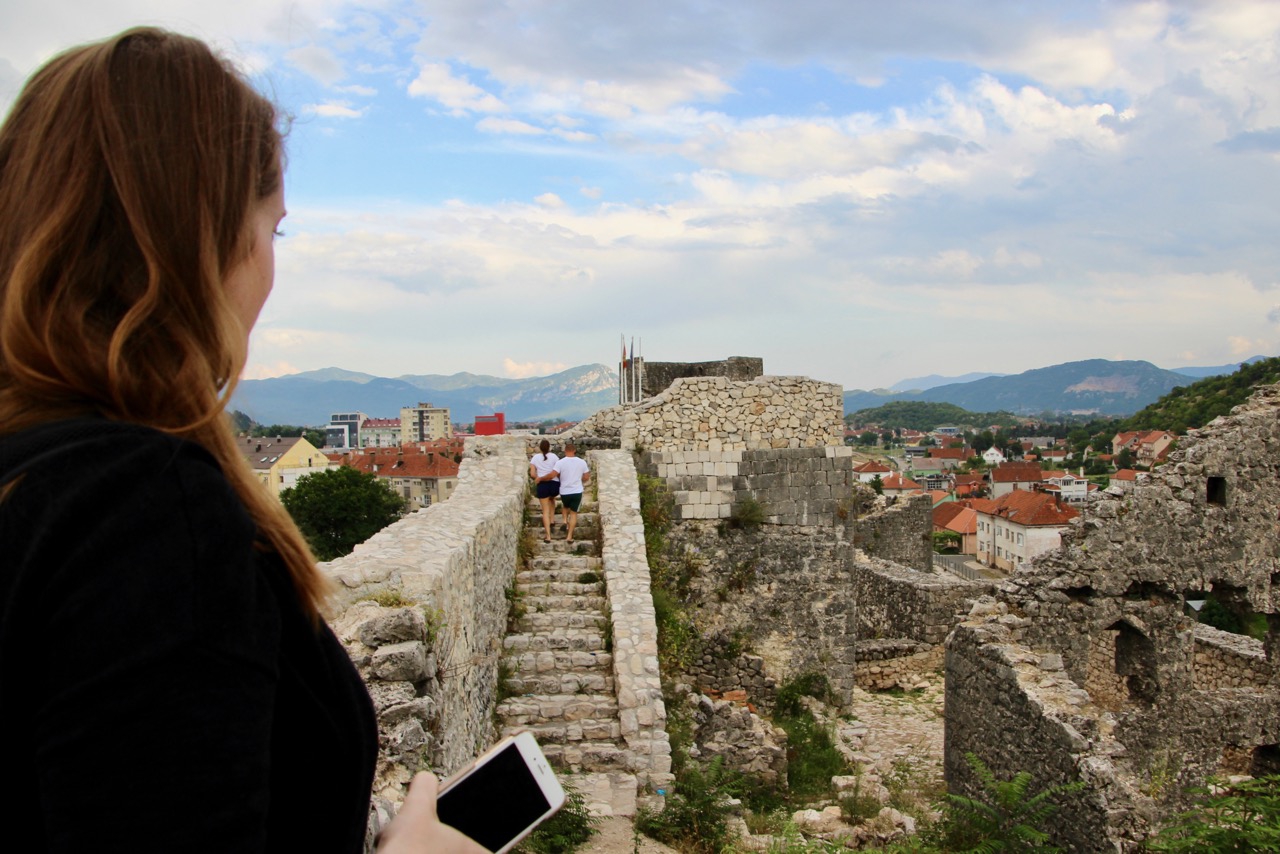
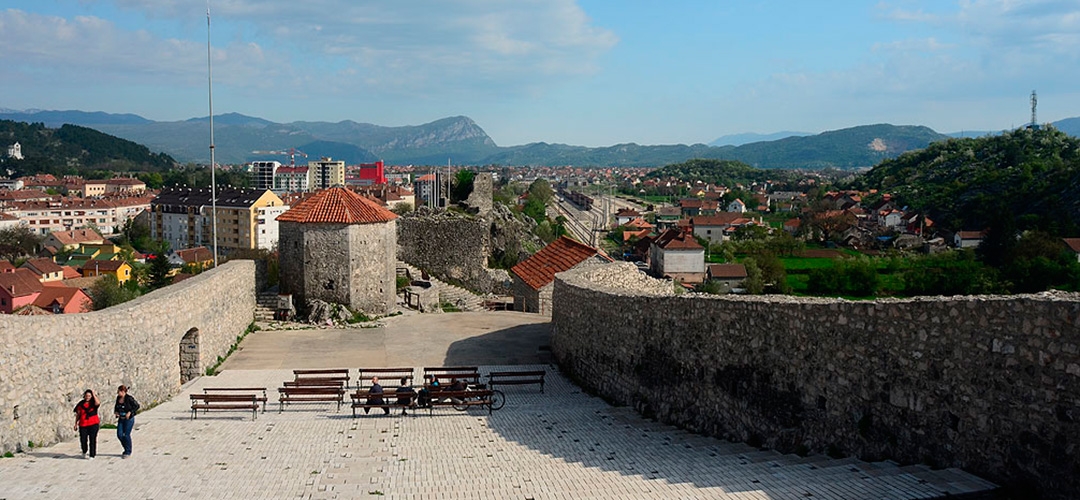
Dramatic historic events make this fortification likable and intriguing. The citadel location nearby the town center and the view from it make it extremely attractive. The fortification’s orientation and position contributed to planning of road networks and promenades development. Stara varoš is located underneath the stone walls and towers. It seems like the fortification, this gigantic construction, is watching over the town and it serves as a witness and a protector of its history.
Mumford asserts that citadels or walls have lost their purpose in big towns a long time ago. However, although they do not serve as military fortifications or serve as a defence, they represent stone protectors of the past and attractive venues for different mass gatherings.
The rampart turned out to be an exquisite stage for cultural events. Theater plays had been planned for the big stage under the sky, however, the idea was never pushed forward. Today, both small and big stage are used for music concerts and festivals. Several thousands of people gather for these events during summer time. Thus, the Nikšić fortress continues with its life as a stage and as an extremely significant locality regarding the town’s history.